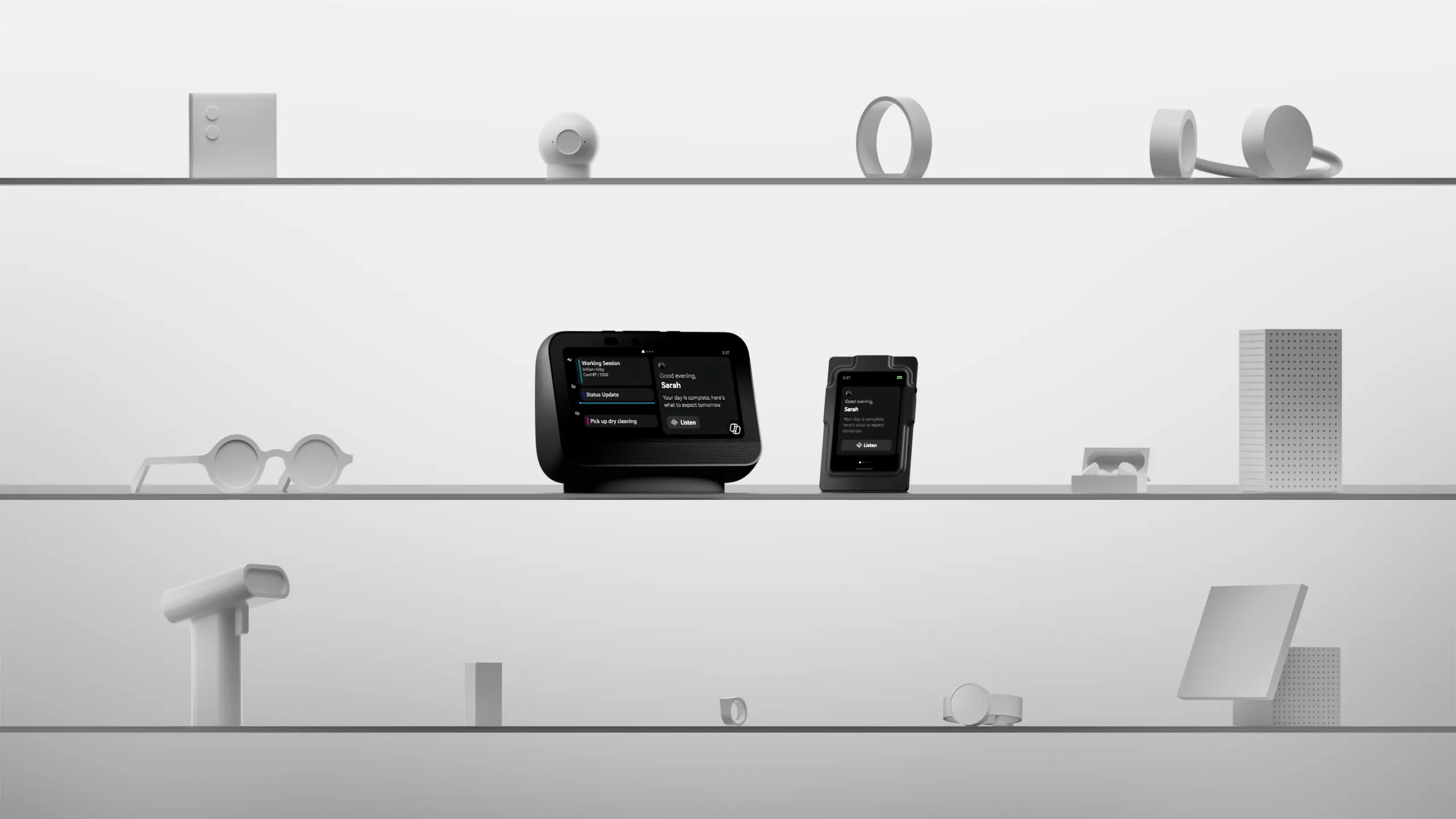
Microsoft is hard at work fixing Windows 11 through its K2 initiative, and there appear to be no concrete signs of “Windows 12” just yet, but that does not mean that the company is not busy building other operating systems, too. At its Build 2026 developer conference, the firm has unveiled Project Solara, powered by its Microsoft Device Ecosystem Platform (MDEP) operating system.
In a nutshell, Project Solara aims to provide a software platform for AI agents, along with “tailored” hardware solutions, offering innovative form factors. The idea is to build a diverse ecosystem of devices and experiences that offer an agent-first journey. Microsoft is envisioning a utopian future in which new hardware form factors can be enabled rapidly via AI agents, without rebuilding the entire stack (hardware, base OS, shell, browser, apps, and SDKs) each time. Project Solara emphasizes tackling customer pain points through agentic AI rather than building a traditional UX surface.
Microsoft’s latest initiative seems to be quite ambitious overall, as it is betting that AI agents will eventually replace apps, and rather than having people manually press buttons, the aim of agents will be to capture user intent and context invisibly to solve the same problem. However, it is also working on a just-in-time UI, which it describes as follows:
The ability for an agent experience to adapt across devices and modalities without requiring developers to redesign everything for every new form factor. Today, that means semi-structured approaches like adaptive cards and known content types. Over time, it moves toward more dynamic and generative interfaces. This is what makes specialized form factors viable.
We are previewing concepts that explore two very broad categories: stationary and portable. Both are multimodal: glanceable access, voice, vision, and getting to the right agent at the right moment.
Project Solara is being built on three pillars, namely: enterprise-readiness with proper security and privacy, an agent-driven interaction model powered by just-in-time UI, and the ability to flexibly add your own agents. Meanwhile, the device-side attributes of this platform have been described as follows:
- Microsoft Device Ecosystem Platform (MDEP) is an enterprise-grade operating system built on AOSP, designed to meet the highest standards of security, reliability, ease of deployment, and innovation—enabling device makers to build and deploy at scale.
- Agent Shell that can dynamically load and tailor multiple cloud-based agents.
- Microsoft Intune allows IT administrators to manage and secure these devices just like PC and mobile devices today.
- Entra ID so users can use their existing Microsoft accounts.
- Hello for Business with at least one biometric authentication method, like facial recognition or fingerprint, allowing seamless access to the device.
- Easy privacy controls like a physical mic mute button, and clear indicators when listening or recording.
- Approved chipsets accompanied by applicable reference designs.
Microsoft has emphasized that its platform will allow several specialized agents to operate simultaneously rather than locking all power to a single agent. However, it believes that manually adding and invoking agents is too cumbersome for the end-user, which is why it is also building an agent dispatcher and an agent task manager infrastructure to automatically surface agents on your behalf.
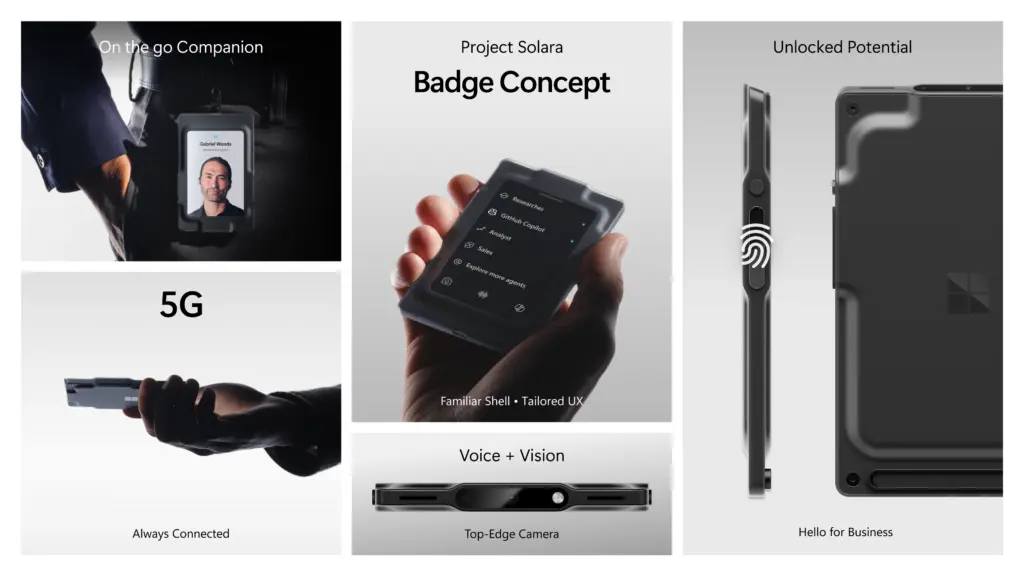
Right now, Project Solara is in the early design and concept stage, with Microsoft collaborating with Qualcomm and MediaTek, who will be Redmond’s first silicon partners in this initiative. One of its concept devices under this umbrella is the Badge, showcased above. This is designed with frontline workers and hospital staff in mind, who can use this badge as a companion to get instant access to all their agents. Another concept form factor is the Desk, which you can check out here.
Microsoft has indicated that it will begin a private pilot program for Project Solara with some partners in the “coming months”. Given the scope and ambition of the initiative, it will likely be at least a few years before we see any tangible consumer product based on Project Solara. Still, Microsoft has encouraged agent builders to already start thinking big and envision a future that is not limited to screens and the hardware form factors available today.