The MacBook Neo is a revelation, full stop. Apple’s $599 laptop looks, feels, and sounds premium in ways that similarly priced Windows laptops never even tried to match. It’s no surprise that the PC industry scrambled to muster a response, with the initial volley breaking cover at Computex – spearheaded by Dell’s $699 XPS 13, a new notebook that rightfully mopped up in our Best of Computex awards.
Here’s the exciting part: Dell clearly understood the assignment. It borrowed the parts of the MacBook Neo that matter most, giving it a leg up against rival MacBook Neo competitors… though one thing may wind up being the XPS 13’s Achilles heel in the long run.
Dell’s XPS 13 understands the MacBook Neo’s appeal
I’ve been using the MacBook Neo for a month, after decades of buying cheap Windows laptops under $500, so I can speak firsthand to its appeals. It’s all about the feel, man.
Cheap Windows laptops feel like crap. They’re pokey, plasticky slabs of uninspired sadness – utilities that let you pay bills and email grandma more than something you’re excited to crack open.
Foundry
The MacBook Neo isn’t. You want to use it.
Apple relentlessly focused on the aspects that make a laptop pop. The all-aluminum chassis is just the beginning – the screen is pixel-packed and vibrant, the sound is punchy, the battery lasts forever, the touchpad feels great, and the recycled iPhone processor delivers primo single-core performance, meaning everything is responsive and apps open lickety-split.
The parts of the MacBook Neo you can see or feel all feels great, the exact opposite of the traditional cheap Windows laptop experience.
The Dell XPS 13 isn’t exactly a cheap Windows laptop at $699, but it’s what passes for it in 2026 and it clearly studied from Apple’s playbook. I haven’t touched it, but on paper, the Dell XPS 13’s scant 2.2-pound weight and 17 hours of claimed battery life rival the Neo, while the OLED display and backlit keyboard trump it. (See? You get a little more for the extra $100.)
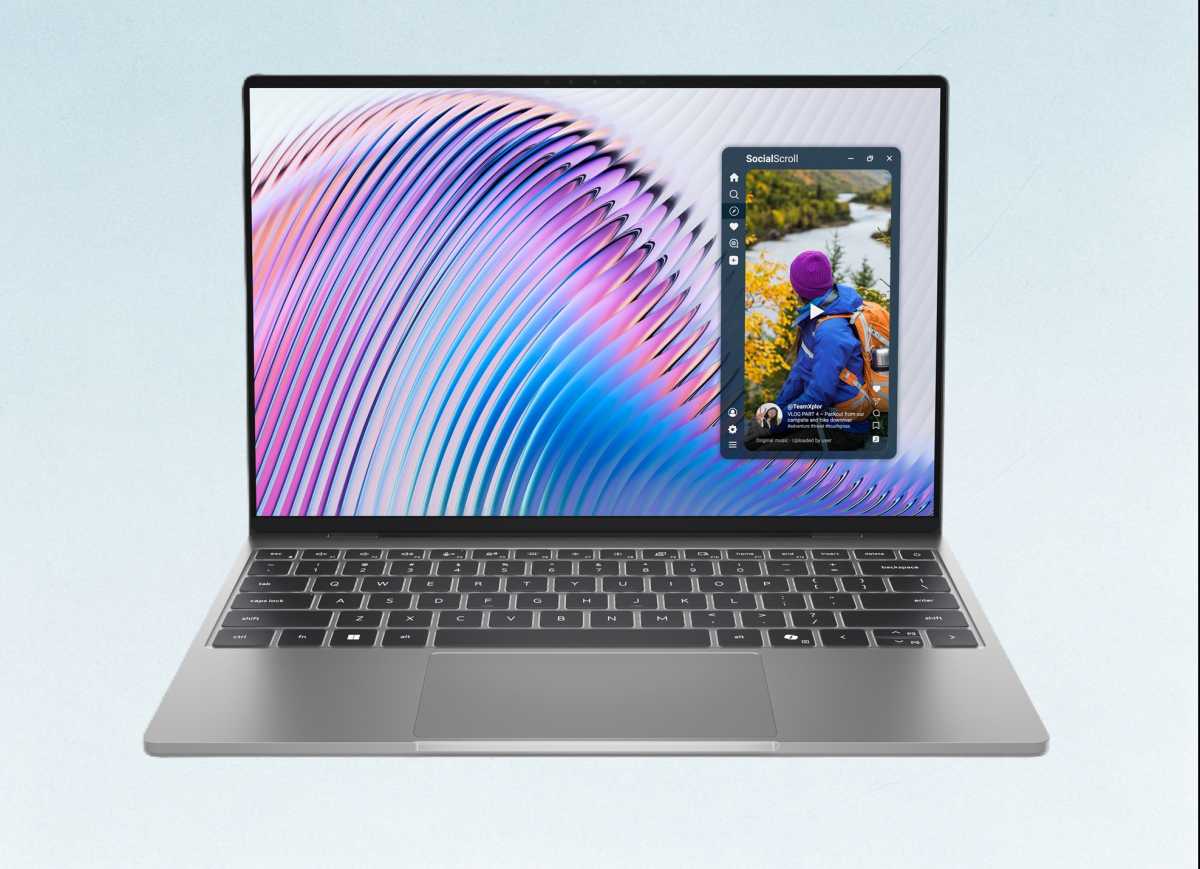
The new Dell XPS 13.
Dell
That matters. I’ve always advised loved ones to spend more on the parts you spend all day physically interacting with – the screen you look at, the mouse you touch, the chair you sit in all day, et cetera. The visceral experience of connecting with your device matters so much more than whether your processor or SSD moves a file two seconds sooner.
Apple clearly gets that. Dell always has with its XPS lineup, and that now extends down to the entry-level $699 XPS 13 – regardless of whether or not it’s aping the MacBook Neo. I have little doubt the XPS 13 will be incredibly appealing to budget Windows PC buyers. Hell, I’m interested myself (though you should always wait for reviews, kids).
Will Windows ruin the party?
My only concern mirrors another MacBook Neo design decision: The Dell XPS 13 only includes 8GB of RAM, as the memory crisis rages on.
The MacBook Neo doesn’t just feel good under your fingertips, it feels good in minute-to-minute use. There are two major reasons for that.
First, the MacBook Neo’s processor is an iPhone castoff that prioritizes single-core performance. Single-core performance influences your PC’s speed and responsiveness. The Dell XPS 13 uses a new Intel Wildcat Lake processor built to enable cheap laptops. Even if it can’t match the Neo, I’m sure it’ll work fine in day-to-day use.

Roman used the MacBook Neo to edit the Macworld Podcast’s YouTube video — something you’d hate to do on an 8GB Windows laptop.
Foundry
The memory, though. Using the MacBook Neo as a daily driver has been a revelation because Apple’s MacOS handles memory allocation and app switching so much better than Windows does. The Neo’s combination of a fast CPU and MacOS’s fantastic memory management lets it punch so, so far above its weight class.
My Macworld pal Roman Loyola pushed his MacBook Neo to the limit, subjecting it to 4K video editing workloads and opening a whopping 59 browser tabs at once. It didn’t break. I’ve used my Neo the same way I use my blinged-out gaming PC, hot-swapping between Apple TV streams, Xbox Game Pass games, Spotify, Discord, and a tab-laden Chrome instance throughout the day.
It never sputters. It never falters. It always feels fast.
Roman summed it up well: “[The MacBook Neo] is a great Mac for everyday tasks, and will even handle the occasional pro app. I’m sure there’s a ceiling to what you can do with it, but with so much headroom, there’s a good chance you’ll never get anywhere near it.”
Meanwhile, Microsoft’s big project for 2026 is to make Windows 11 less shitty. I’m not joking – the focus is on “performance, reliability, and craft” after years of bloat led to user outrage and Linux migrations.
Windows 11’s memory handling is egregiously bad compared to MacOS. Even if the rest of the Dell XPS 13 experience holds up to the MacBook Neo’s lofty new standards, I would be utterly shocked if it feels as good in minute-to-minute use.
Many of my colleagues refuse to use a Windows PC with 8GB of RAM, claiming those machines bog down to unusable speeds. I don’t necessarily agree – as a Chromebook advocate surrounded by normal people who use computers as necessities, not hobbies, an 8GB Windows laptop holds up perfectly fine for basic tasks and web browsing with a handful of tabs open.
I think the Dell XPS 13 will shine brightly if used in that way, feeling and looking fantastic all the while.
Cheap Windows laptops need a more premium Windows

Pixar/Disney/Microsoft
But I suspect Windows – and thus the XPS 13 – will crumble the second you throw punishing workloads at it. I could never multitask the way I can on the MacBook Neo with any of my past $500 laptops, and Microsoft is a big part of the reason why, not just the hardware.
Interestingly, in an interview this week, Microsoft CEO Satya Nadella said “we never got there” in terms of software optimization during the prime PC era – developers just assumed the next generation of processors will be ever-faster, rather than tweaking their programs to run better. It feels like Windows fell victim to the same trend, and until Microsoft fixes it, cheap Windows laptops fundamentally can’t match the MacBook Neo’s user experience, no matter how heavenly their hardware is.
Microsoft is working on making Windows better. Hopefully the changes come fast and furious because Dell understood the assignment. The XPS 13 mirrors the MacBook Neo’s most appealing hardware decisions. Heck, it even outshines Apple in some ways!
But until Windows gets its act together, MacBook Neo rivals aren’t even playing the same game. They’ll still need to be used like cheap laptops. The MacBook Neo is a cheap laptop that looks, feels, and handles like a premium experience. That’s a huge difference.