TL;DR
- Checkout Change: Google has clarified its AI Ultra upgrade screen so buyers can compare the two premium plans more directly.
- Plan Split: The lower-priced tier includes 20TB of storage, while the higher option keeps 30TB and higher usage limits.
- Buyer Impact: The clearer screen matters because Google’s paid AI lineup now spans multiple tiers aimed at a very large Gemini audience.
Google has changed its AI Ultra upgrade flow after its two premium tiers left buyers comparing expensive plans under nearly the same label. Buyers choosing between those options now see a more explicit explanation of what the higher bill is supposed to buy.
Vikas Kansal, Google’s lead for Gemini AI subscriptions, said on X that the refreshed view now surfaces usage and storage details while users consider an upgrade. In practical terms, the revised screen is meant to show when the lower-priced tier is enough and when the $200 per month plan’s larger bundle and higher ceilings make sense.
. @Mrwhosetheboss hey Arun we pushed a UI change over the weekend to make the difference between the Ultra 5x and Ultra 20x plan clearer. Hope that’s helpful. Please share any feedback and questions you have and happy to help! (May take a few hours for the change to roll out) https://t.co/uXDJQen5HO pic.twitter.com/kpbenATeeC
— Vikas Kansal (@vikaskansalHQ) May 25, 2026
Google’s highest-end consumer AI offering now spans two price points with different limits, storage bundles and target users. A clearer comparison screen turns that decision into a practical question about monthly AI use, cloud storage and how much capacity a subscriber expects to need.
Why Google Had to Clarify the Upgrade Screen
Google had already been reshaping its premium ladder before checkout design became an issue. In May 2025, the company launched its Ultra tier, then followed with an earlier branding cleanup around the Pro and Ultra labels.
Google’s latest fix focuses on the moment a subscriber is ready to pay. The comparison view now shows usage and storage while buyers evaluate the two AI Ultra options, giving the higher-priced plan a clearer justification before checkout ends. Shared branding can signal that both plans sit in the same premium family, but the upgrade screen still has to explain what practical difference the extra cost unlocks.
For buyers, that difference is less about a label and more about workload. Someone who needs longer Gemini sessions, more frequent premium prompts or more bundled storage has to know that before choosing a plan. Putting those details into the upgrade flow makes the decision less abstract and reduces the chance that the more expensive option looks like unclear premium differentiation instead of a larger-capacity tier.
What Separates the $100 and $200 per Month Tiers
Google launched a $100 per month AI Ultra plan on May 19 for developers, technical leads, knowledge workers and advanced creators. That lower entry point widened access to Google’s top consumer AI tier without eliminating the more expensive version above it.
Capacity is the real dividing line. The lower-priced plan includes a 5X higher usage limit than Pro in the Gemini app and Google Antigravity, plus 20TB of cloud storage. Google keeps 30TB and higher overall limits in the $200 per month tier, which turns the upgrade screen into a decision about how much premium AI work and storage a subscriber expects to need each month.
Usage limits describe how much premium AI work a plan is built to absorb before it starts to feel restrictive. Storage allotments show how much bundled cloud capacity comes with the subscription. Showing both on the same screen gives buyers a faster way to judge whether the lower-priced tier is enough for occasional heavy use or whether a larger monthly bundle fits a steadier AI workload.
Developers, technical leads and other advanced users are also comparing more than raw storage. They are weighing how often they expect to rely on premium models, how much room they need for cloud files and whether a lower monthly price offsets the smaller bundle. Checkout works better when that comparison is visible before payment rather than buried behind plan names alone.
Why the Confusion Matters in Google’s Paid AI Stack
Google’s paid AI lineup now stretches across several price points. The company’s plans are priced at $7.99, $19.99 and $99.99, giving Google more ways to segment access across its AI products. Many of Google’s I/O features also remained tied to paid plans, which makes a tier-comparison screen more important than a simple storage upsell.
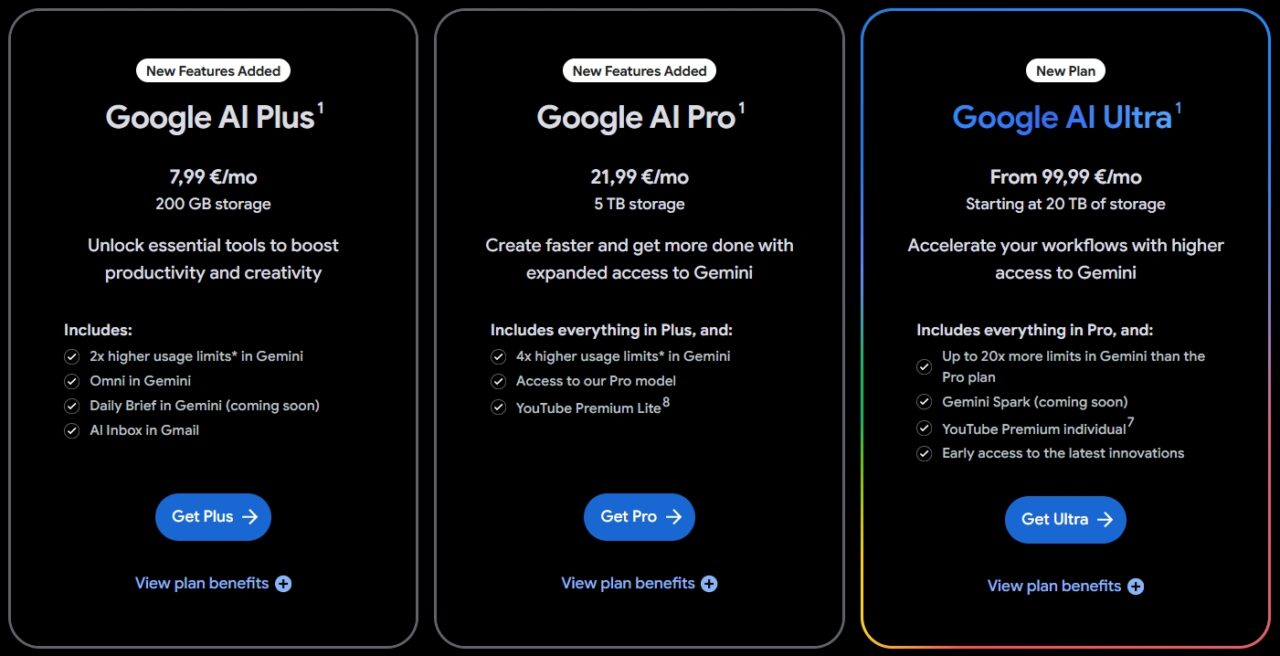
Scale raises the stakes. By I/O 2026, the Gemini app had surpassed 900 million monthly active users, so even a narrow checkout clarification touches a subscription business aimed at a very large audience. Premium AI buyers are now comparing limits, model access and bundled benefits across several offerings, not just deciding whether to move to a single top-tier plan.
Google had also reset Ultra pricing earlier in May 2026 before this clarification landed, which means the company was still refining how its top consumer AI tier should be presented to buyers. Earlier product and naming changes established the broader lineup, while the new checkout view addresses the final moment where subscribers have to decide what level of usage and storage they are actually paying for.